For those of you who are curious to know a bit more about what makes me tick, here are three core values that I believe defines what makes me unique:
1. Holistic Thinking That Endures Through the Details
Many people can articulate the big picture. They can explain the purpose of a class, a meeting, or a survey. That vision, however, often disappears once the actual work starts. I have always tried to keep the “why” alive in every detail.
A senior academic recently reminded me that many early-career researchers focus only on getting published and cited. They rarely pause to ask what lasting impact their work actually has. That observation struck me. Don Dillman expressed a similar idea in a different way: good science requires good communication. If you cannot clearly explain what your research is for, or who it is for, the work risks becoming meaningless.
At every stage of a project, I therefore ask one question: Does this move us closer to the goal? When I write a survey, I keep only the questions that truly matter. When I design a final assignment, I look beyond immediate course objectives to what might still serve students years later.
This habit has shaped my teaching and my consulting. At the SESRC, I worked closely with Thom Allen on projects where this mindset made the real difference. I guest-lectured in Lena Le’s graduate Survey Practicum course and stressed why thinking holistically is essential to good survey design. One of my favorite moments as an instructor came when a former student told me she landed a job in part because she could showcase the final project she built in my class.
(Continued below…)
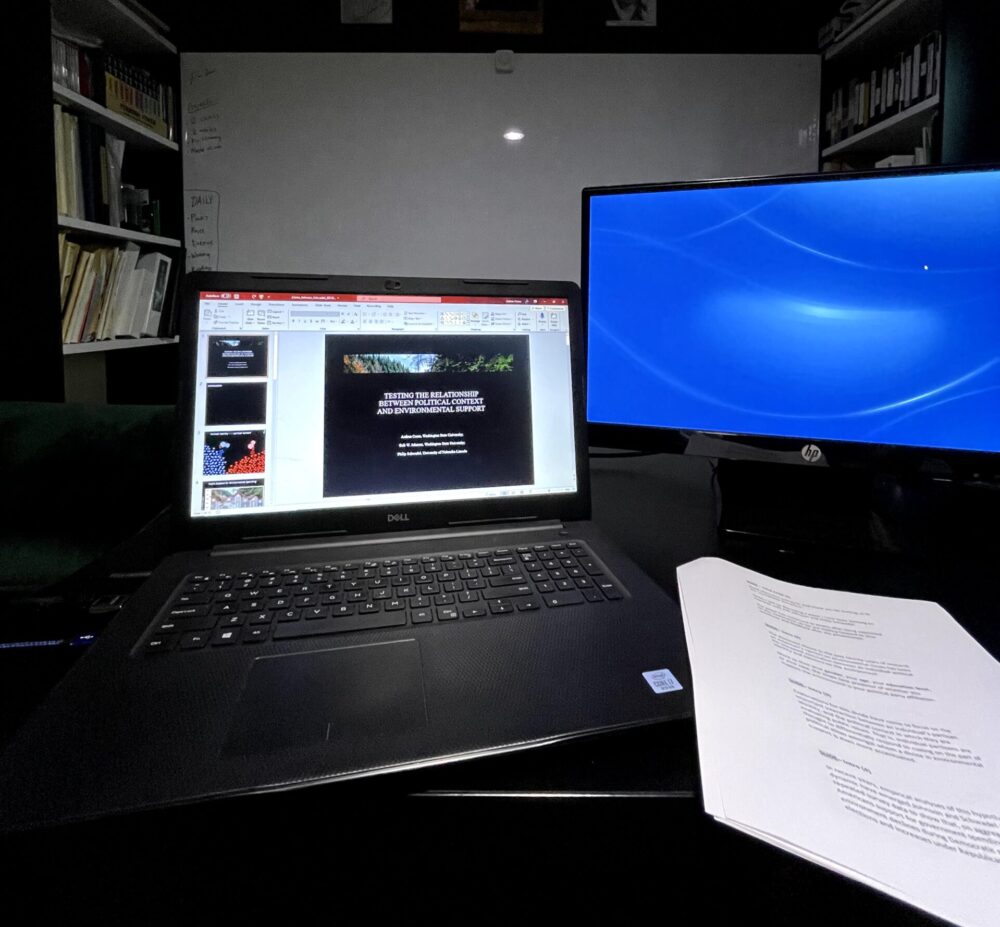
2. Building Systems for Knowledge Sharing
I’m terrible at remembering things. To survive, I started writing everything down clearly and sharing it. That personal crutch became my biggest professional strength: turning tribal knowledge into durable, reusable assets that save time and let teams scale smoothly.
At WSU’s Office of Strategy, Planning, and Analysis (OSPA), I created onboarding guides, standard operating procedures, and data maps that spelled out exactly where files lived and how every dataset was built. New hires could contribute on day one instead of spending weeks reverse-engineering someone else’s work. I even wrote SAS and SQL SOPs while I was still learning the languages.
The same reflex shows up everywhere. I published an open-source Stata codebook so anyone (including future-me) could use it without restricted access. That instinct also drove me to co-create and co-host the Total Survey Design podcast. Every episode forces me to re-articulate core survey principles out loud (keeping them fresh in my own head) while giving thousands of researchers, nonprofits, and agencies practical, no-nonsense guidance they can actually use.
Employers get assets that outlast my tenure: clean documentation, replicable workflows, and training content that keeps working long after I’m gone. Dr. Coleen McCracken, my former supervisor at OSPA, saw how this approach slashed onboarding time, strengthened cross-department collaboration, and made our deliverables more consistent and defensible.
(Continued below…)

3. Connecting the Dots Across Ideas, Fields, and Problems
I love spotting connections others miss and asking, “What happens if we bring this idea over here?”
In my dissertation, I borrowed Andrew Szasz’s “inverted quarantine” concept (originally about bottled water) and applied it to climate-change attitudes. The result: believing in personal solutions was one of the strongest predictors of lower support for collective policy. The idea seemed odd to some reviewers at first; the data changed their minds.
In a different work, took the Elo rating system from chess and adapted it to rank subjective survey preferences more reliably than traditional methods. Presented that at the 2025 AAPOR conference; attendees immediately saw applications for ranking policy priorities, brands, and social issues.
In applied settings, kept the same habit of cross-pollination. At WSU, combined existing student survey data with on-campus resource inventories to produce the Student Basic Needs by Campus report. The output wasn’t just pretty charts; it told each campus exactly which services were overwhelmed and which had spare capacity, so recommendations could be implemented the next semester.
I thrive on building bridges between theories, methods, and real-world decisions. If you need someone who can spot overlooked angles, translate complexity into actionable insight, and deliver work that keeps paying dividends, let’s talk. I’m at my best on teams that value clarity, rigor, and lasting impact—whether that’s a short consulting gig or a long-term role.
If you’d like to learn more about my background, you can view my CV here. Or just shoot me an email—I’m always happy to connect and hear what you’re working on.